
Sleeping safe is the biggest challenge that all families, parents, and caregivers face for infants. Here are some tools and resources to help make sleep safe for the baby in your life.
Safe Sleep Information
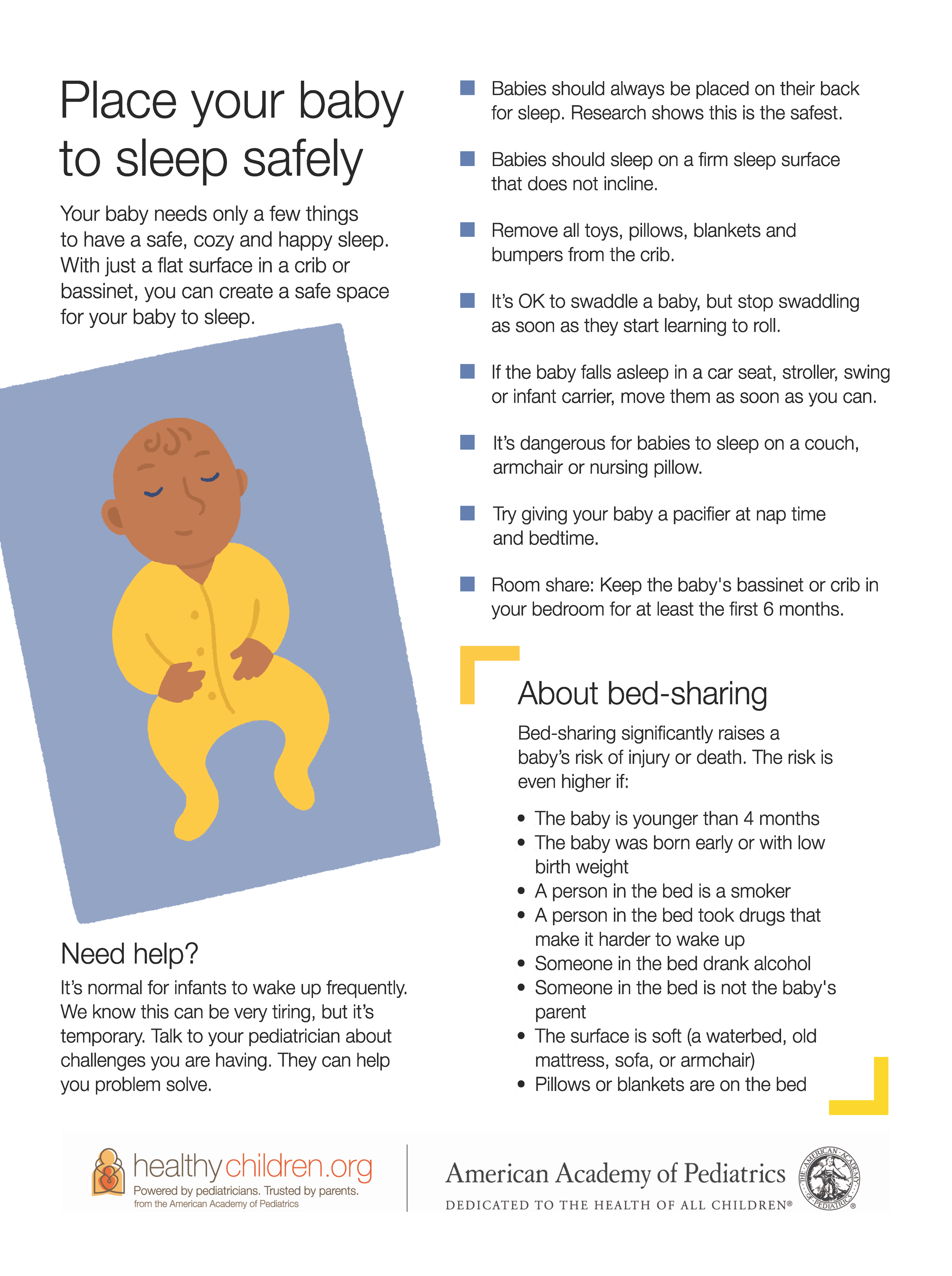
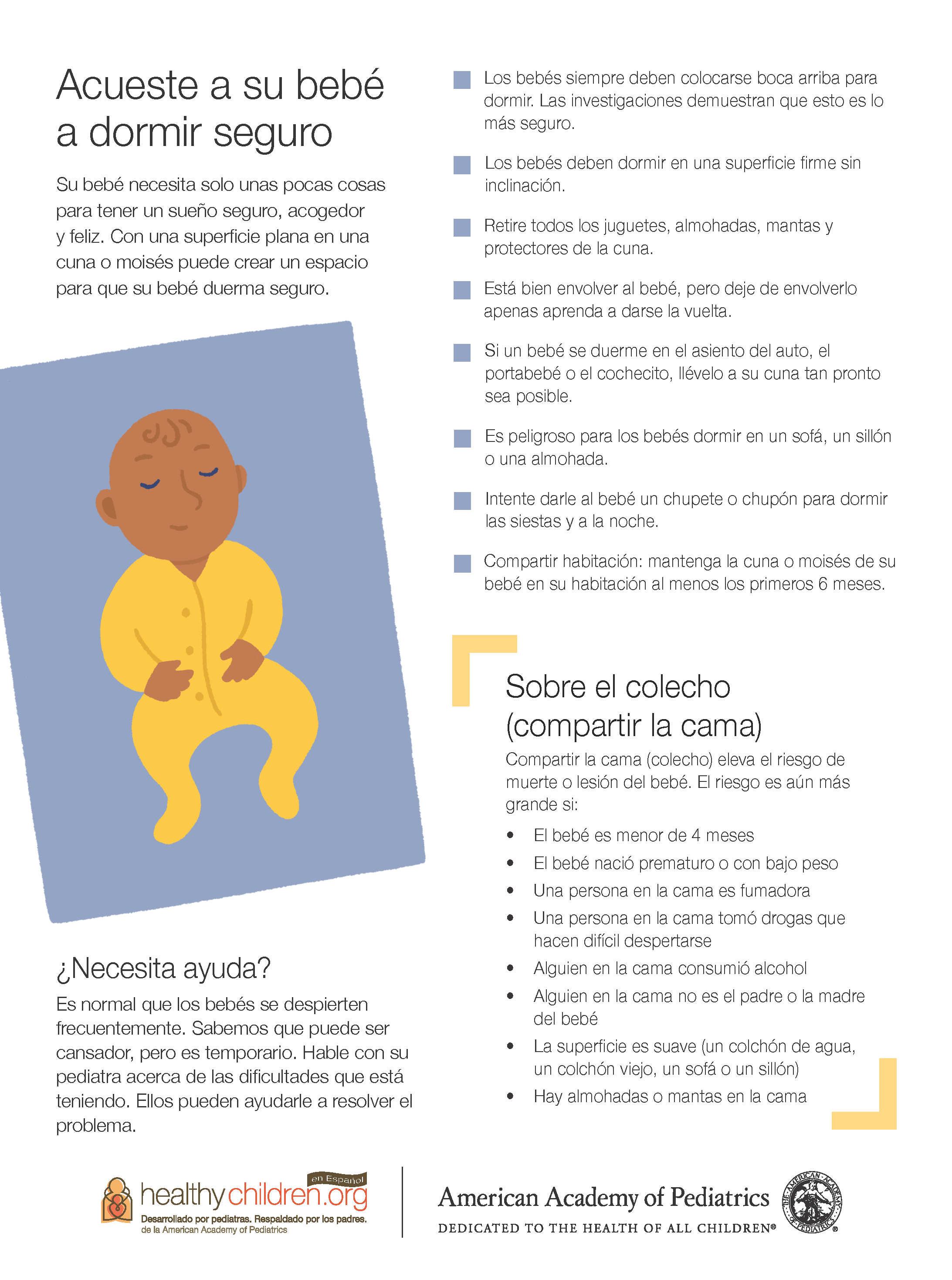
✅ Always use a firm, flat sleep surface for sleeping.
A firm surface means that it shouldn't indent when your baby is lying on it. Any surface that inclines more than 10 degrees isn't safe for your baby to sleep on.
Check the CPSC website to make sure your crib hasn't been recalled, especially if it's not new.
Make sure your crib mattress is designed for your specific crib and that it fits tightly. Use a fitted sheet only—nothing else should be in the crib with your baby.
✅ Baby should always sleep in their own space, never share a bed.
Based on the evidence, the American Association of Pediatrics doesn't recommend bed sharing with your baby under any circumstances. This includes twins and other multiples.
Sharing a room for the first six months can help reduce the risk of Sudden Infant Death Syndrome (SIDS) by 50%.
If your baby falls asleep in a car seat, stroller, swing, infant carrier or sling, you should move them to a firm sleep surface on their back as soon as possible.
✅ Keep toys, soft objects, and loose bedding out of the baby sleep area.
This includes pillows, blankets, plushies, and even bumper pads. They can increase the risk of your baby getting tangled, or stuck in a position they can’t move from.
If you're worried about your baby getting cold, you can dress them in layers of clothing or use a sleep sac. In general, you should dress your baby in only one layer more than you're wearing.
Pacifiers are okay for use, but don’t hang it around their necks- instead attach it to their closes.
Resources:
The Healthy Children website uses information from the American Academy of Pediatrics for parents to understand a wide range of health topics. Healthy Children also has a videos, flyers, and articles about how to make sleep safe for baby.
Find more info here: HealthyChildren.Org

The AAP covers different topics that impact infant health, including how to make sleep safe for infants. They maintain information both on their website, and on the HealthyChildren.org website.
Find more info here: AAP Safe Sleep
National Institute of Health (NIH)
The NIH covers different sleep topics, and how easy it is to make a safe sleeping area for your baby. It also covers ways to reduce the risk of Sudden Infant Death Syndrome (SIDS) and other sleep-related infant deaths.
Find more info here: NIH Safe Sleep Resources